




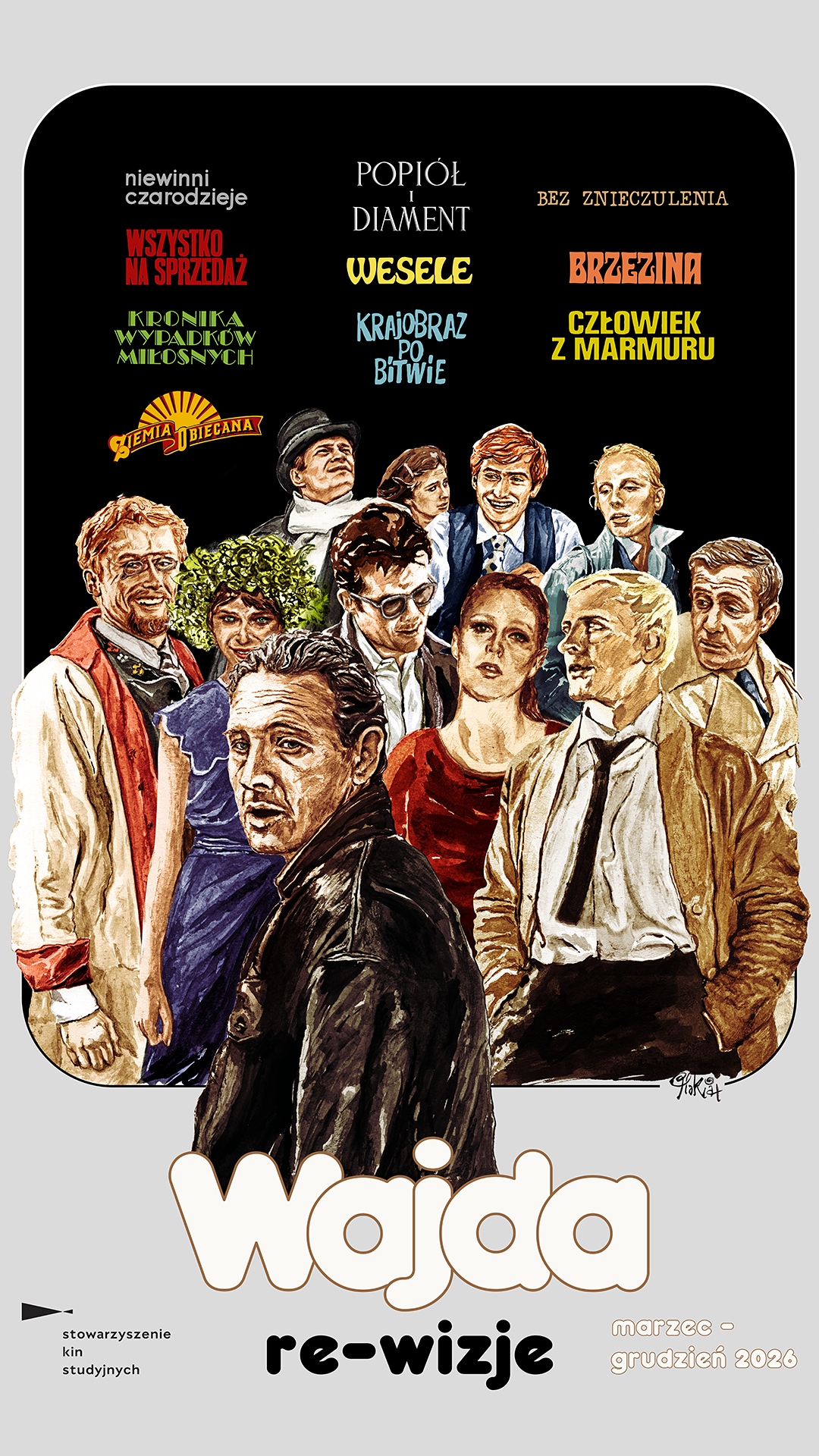
W setną rocznicę urodzin Andrzeja Wajdy zapraszamy na wyjątkowy przegląd „WAJDA: re-wizje” – cykl dziesięciu filmów jednego z najwybitniejszych twórców światowego kina. To nie tylko hołd dla dorobku reżysera, lecz także ponowne spojrzenie na jego dzieła: odczytywane dziś na nowo, w innym kontekście historycznym i społecznym, wciąż poruszają, prowokują i inspirują.
- 7 marca – grudzień 2026
BILETY dostępne w kasie kina GCF lub na naszej stronie w zakładce REPERTUAR.
- 7 MARCA – Popiół i diament (1958) – kup bilet
Ikona polskiej szkoły filmowej, film-symbol i punkt odniesienia dla całej twórczości Wajdy. - 23 KWIETNIA – Wesele (1972) – kup bilet
Narodowy dramat i rozrachunek z polskością – idealny moment przed maturami. - 28 MAJA – Niewinni czarodzieje (1960)
Film o młodości, miłości i rytmie miasta – z wyraźnie majowym klimatem. - 25 CZERWCA – Człowiek z marmuru (1977)
Jedno z najważniejszych dzieł kina zaangażowanego, aktualne i dziś. - 23 LIPCA – Brzezina (1970)
Kameralna opowieść o życiu, śmierci i naturze. - 20 SIERPNIA – Kronika wypadków miłosnych (1985)
Historia miłości rozgrywająca się w przededniu wojny – pożegnanie pewnej epoki. - 17 WRZEŚNIA – Krajobraz po bitwie (1970)
Miłość w cieniu wojny, który nie znika wraz z końcem walk. - 15 PAŹDZIERNIKA – Bez znieczulenia (1978)
Stale aktualny film o opresji, polityce i osobistym rozpadzie. - 19 LISTOPADA – Ziemia obiecana (1974)
Monumentalne dzieło o narodzinach kapitalizmu i cenie sukcesu. - 17 GRUDNIA – Wszystko na sprzedaż (1968)
Autotematyczny, zimowy film o stracie i pamięci w przededniu 60. rocznicy śmierci Zbyszka Cybulskiego.
Andrzej Wajda to jedyny polski twórca uhonorowany Oscarem za całokształt twórczości i zarazem jedna z najważniejszych postaci światowej kinematografii. Reżyser, scenarzysta, inscenizator teatralny, kierownik artystyczny legendarnego Zespołu Filmowego „X”, pedagog, działacz opozycji demokratycznej, dla którego kino stanowiło zobowiązanie artystyczne, obywatelskie i moralne.
Choć dziś bywa postrzegany jako twórca pomnikowy, należący do przeszłości, Wajda pozostaje reżyserem zaskakująco nowoczesnym. Jego filmy do dziś zachwycają narracyjnym mistrzostwem, dynamiką rytmu, malarską wrażliwością i intensywną metaforyką. Był demiurgiem planu filmowego – zawsze perfekcyjnie przygotowanym, pełnym energii i pasji, z ogromną czułością podchodzącym do aktorów i współpracowników. Odkrywał talenty, inspirował młodszych twórców i potrafił wydobywać maksimum możliwości z całych zespołów artystycznych.
Przegląd rozpocznie się w marcu, w miesiącu urodzin Reżysera a potrwa do grudnia. Mini-retrospektywa „WAJDA: re-wizje” ma na celu przywrócenie Wajdy jako twórcy aktualnego – nowoczesnego, młodzieńczego w ekspresji i niezwykle dynamicznego – reżysera, który zawsze trzymał rękę na pulsie współczesnej kultury i z niezwykłą przenikliwością opowiadał o młodych ludziach uwikłanych w historię, politykę i narodowe mity. Dobór filmów podkreśla różnorodność jego dorobku: obok arcydzieł powszechnie uznanych pojawiają się tytuły, które dziś szczególnie domagają się reinterpretacji a program przeglądu został ułożony w rytmie kalendarza – każdy miesiąc przynosi inny tytuł, korespondujący z porą roku, nastrojem i tematyką filmu. Cykl otwiera „Popiół i diament” (1958) – film szczególny: najważniejszy i najbardziej osobisty w dorobku Wajdy.
„WAJDA: re-wizje” to zaproszenie do dialogu z klasyką – do ponownego spotkania z filmami, które współtworzyły naszą wrażliwość i język kina. Przegląd kierujemy zarówno do widzów, którzy dorastali z filmami Wajdy, jak i do młodszej publiczności, dla której będzie to pierwsze spotkanie z jego twórczością na dużym ekranie.
Organizator: Stowarzyszenie Kin Studyjnych
Kurator przeglądu: prof. Rafał Syska
Partner Główny: Wytwórnia Filmów Dokumentalnych i Fabularnych
Partner: Polski Instytut Sztuki Filmowej
Projekt finansowany ze środków: Ministerstwa Kultury i Dziedzictwa Narodowego
Patroni medialni: Filmweb, KINO, RMF Classic, Filmawka, Kultura Wokół Nas
On the centenary of Andrzej Wajda’s birth, we invite audiences to a special retrospective, „WAJDA: Re-Visions” – a cycle of ten films by one of the most outstanding figures in world cinema. This program is not only a tribute to the director’s legacy, but also an opportunity to revisit his work from a contemporary perspective. Seen today, in a different historical and social context, these films remain deeply moving, provocative, and inspiring.
- 7th March – December 2026
TICKETS available at the GCF cinema box office or on our website in the REPERTOIRE section.
Once a month, we will screen one film from the director’s body of work. Each screening will include English subtitles. We will watch:
- 7th MARCH – Ashes and diamonds (1958) – buy ticket
One of the most famous films in Polish cinema—a story of a young resistance fighter torn between duty and the desire for a normal life, blending romantic ethos with the tragic fate of the “cursed”.
- 23rd APRIL – The Wedding (1972) – buy ticket
A visually, sonically, and narratively dazzling adaptation of Wyspiański’s drama—a modernist spectacle that demonstrates the universal power of Polish symbols and the expressive strength of national cinema. - 28th MAY – Innocent sorcerers (1960)
Light in tone yet serious in meaning, this portrait of Warsaw’s young intellectuals in the early 1960s captures a longing for authenticity in a world of poses and conventions—and remains a key work of the Polish New Wave. - 25th JUNE – Man of marble (1977)
A revelatory journey through archives and memory in Stalinist Poland, exposing propaganda’s power to destroy the individual and standing as one of the most important cinematic portraits of systemic oppression. - 23rd JULY – Birch wood (1970)
A sensual, painterly meditation on life and death—an existential confrontation between the affirmation of existence and the abyss of mourning, revealing universal truths about human nature. - 20th AUGUST – Chronicle of love accidents (1985)
A love story unfolding in the final moments before the war in the Vilnius region—a richly colored portrait of the multicultural Second Polish Republic and a deeply nostalgic vision of a world vanishing forever. - 17th SEPTEMBER – Landscape after the battle (1970)
A poetic meditation on the trauma of camp survivors, a haunting study of shattered psyches and love irreversibly marked by the experience of death. - 15th OCTOBER – Rough treatment (1978)
A haunting diagnosis of late-1970s society and a portrait of a man trapped by both the system and his own weaknesses—one of the most penetrating analyses of moral crisis in Polish cinema. - 19th NOVEMBER – The promised land (1974)
A sweeping vision of emerging capitalism and ruthless economic struggle in nineteenth-century Łódź, and a monumental portrait of the birth of modernity and the human cost it demands. - 17th DECEMBER – Everything for sale (1968)
A self-reflective story about the film world, an intimate tribute to Zbigniew Cybulski, and a deeply personal story of loss, memory, and the mythology of cinema.
Andrzej Wajda is the only Polish filmmaker to have received an Academy Award for Lifetime Achievement and remains one of the most important figures in international cinema. A director, screenwriter, theatre director, artistic head of the legendary „X” Film Unit, educator, and activist in the democratic opposition, he viewed cinema as an artistic, civic, and moral commitment.
Although he is sometimes perceived today as a monumental, historical figure, Wajda remains a surprisingly modern filmmaker. His films continue to impress with their narrative mastery, dynamic rhythm, painterly sensibility, and powerful metaphorical language. He was a true demiurge of the film set. Always impeccably prepared, energetic, and passionate, approaching actors and collaborators with remarkable sensitivity. He discovered new talents, inspired younger generations of artists, and consistently drew the very best from entire creative teams.
The film selection highlights the diversity of his oeuvre: alongside widely recognized masterpieces, the program includes titles that today call for renewed interpretation. The series follows the rhythm of the calendar year – each month features a different film, corresponding to the season and mood. The Retrospective opens with „Ashes and Diamonds” (1958) – a landmark film, both the most important and the most personal in Wajda’s career.
„WAJDA: Re-Visions” is an invitation to engage in dialogue with the classics – to rediscover films that helped shape our cinematic language and collective sensibility. The retrospective is addressed both to audiences who grew up with Wajda’s films and to younger viewers, for whom this will be their first opportunity to experience his work on the big screen.